
How to Make a Scrapbook Recipe Book for Family Recipes


Scrapbook recipe book projects solve a very specific problem: what do you do with the loose, printed, and family recipes you want to keep, but do not need in your everyday cooking system? A keepsake cookbook gives those special recipes a useful home instead of sending them back to a drawer. If you are sorting a much larger collection, begin with my recipe organization guide.
This is not about becoming a serious scrapbooker or decorating every recipe you own. It is about choosing the recipes that carry a person, memory, or family tradition, organizing them so they are easy to find, and turning them into a cookbook someone can actually use. The rest can stay in a simple binder or in a digital recipe manager.
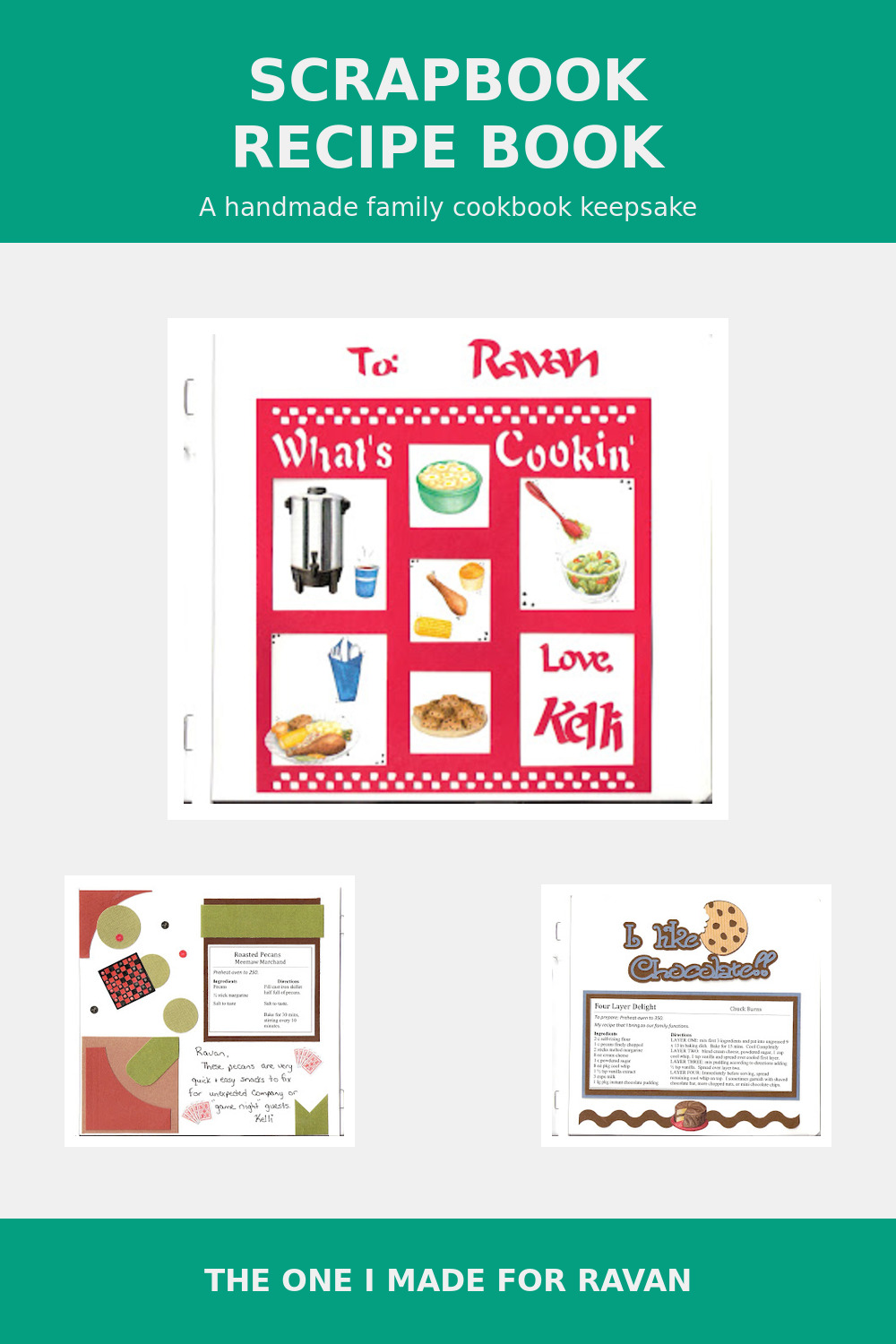
The book pictured here is the one I made for my sister-in-law, Ravan. I do not scrapbook anymore, but it is a useful example because it shows both what worked and what I would change now. You can borrow the practical parts without recreating every decorated page.
What Belongs in a Scrapbook Recipe Book?
A scrapbook cookbook works best as a curated collection, not as storage for every recipe you have ever printed. Choose recipes that gain meaning from a name, note, photograph, or story.
- Family dishes people request by name
- Copies of handwritten recipe cards
- Recipes connected to holidays or family traditions
- Dishes from a parent, grandparent, aunt, uncle, or close friend
- Recipes you want to give a newlywed or someone leaving home
- Personal recipes with changes that are not written anywhere else
A simple test: If losing the paper would mean losing part of the story, it belongs in the keepsake collection. If you only need the instructions for Tuesday’s dinner, it probably belongs in your everyday recipe system.
How to Organize the Recipes Before You Decorate
Do not start with paper colors and stickers. Start by making the collection usable. Gather the recipes, remove duplicates, and decide what the finished book needs to do.
- Choose the recipient. A family archive will be different from a cookbook made for a wedding or first apartment.
- Make one working pile. Collect the loose pages, cards, printouts, and digital recipes you are considering.
- Separate originals from copies. Protect irreplaceable handwritten cards and plan to scrapbook scanned copies.
- Remove duplicates. Keep the clearest version and transfer any useful notes before discarding an extra copy.
- Choose broad categories. Breakfast, main dishes, sides, desserts, and family favorites are usually enough.
- Arrange each category. Alphabetical order is easiest to maintain, while grouping recipes by person creates a more story-driven book.
- Create an index. List every recipe and its page number so the book remains practical after the crafting is finished.
Simple Supplies for a Usable Family Cookbook
You do not need a cart full of craft supplies. The album should protect the recipes, open comfortably on a counter, and allow room for additions.
- A three-ring binder, post-bound album, or refillable scrapbook
- Acid-free card stock or paper
- Clear page protectors that can be wiped clean
- Printed copies of recipes and scanned handwriting
- Photo-safe adhesive for copies and decorations
- Dividers or tabs for the recipe categories
- A pen for names, dates, memories, and cooking notes
- A few paper scraps, photos, or embellishments if you want them
The page protector matters more than matching decorations. It keeps flour, grease, and wet hands away from the paper while the recipe is being used.
The Story Behind My Scrapbook Recipe Book
I made this album for Ravan during a semi-vacation in Orlando. Instead of hauling full sheets of scrapbook paper with me, I packed bits and pieces from my scrap bin. Almost everything in the book came from those leftovers, except for a few die cuts. The cover says “To: Ravan” and “Love, Kelli.”
It was never meant to be a perfect display piece. It was a handmade gift filled with the recipes I thought my sister-in-law should have, and it captures exactly how I saved and shared recipes at that point in my life.
The original post about this book went live in March 2009. At the time, I said the album was not finished because I still had more recipes to type. That is the honest version of a handmade project. It can be meaningful without being complete, coordinated, or ready for a craft-room photo shoot.
I used whatever scraps I had, matched them to each recipe as best I could, and let the pages be playful. Some are tidy. Some are busy. Some have handwritten notes squeezed into the available space. Together, they feel like me at that point in my life.
The part I love most: this book was made to be used, not judged. A family cookbook does not need matching paper or professional lettering. It needs recipes people will actually cook and enough of your personality that they know who made it.
Would you like to save this?
A Look Inside the Pages
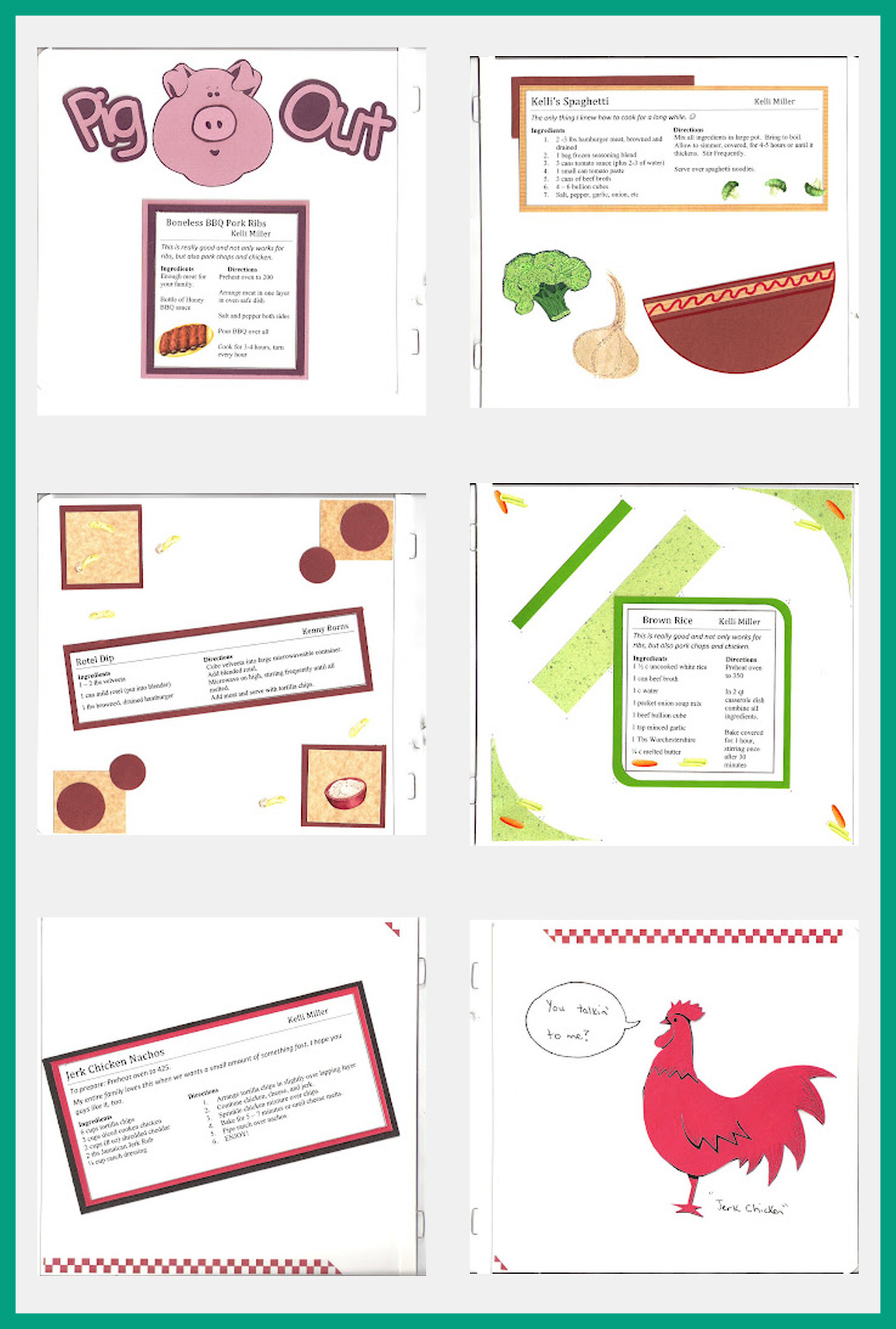
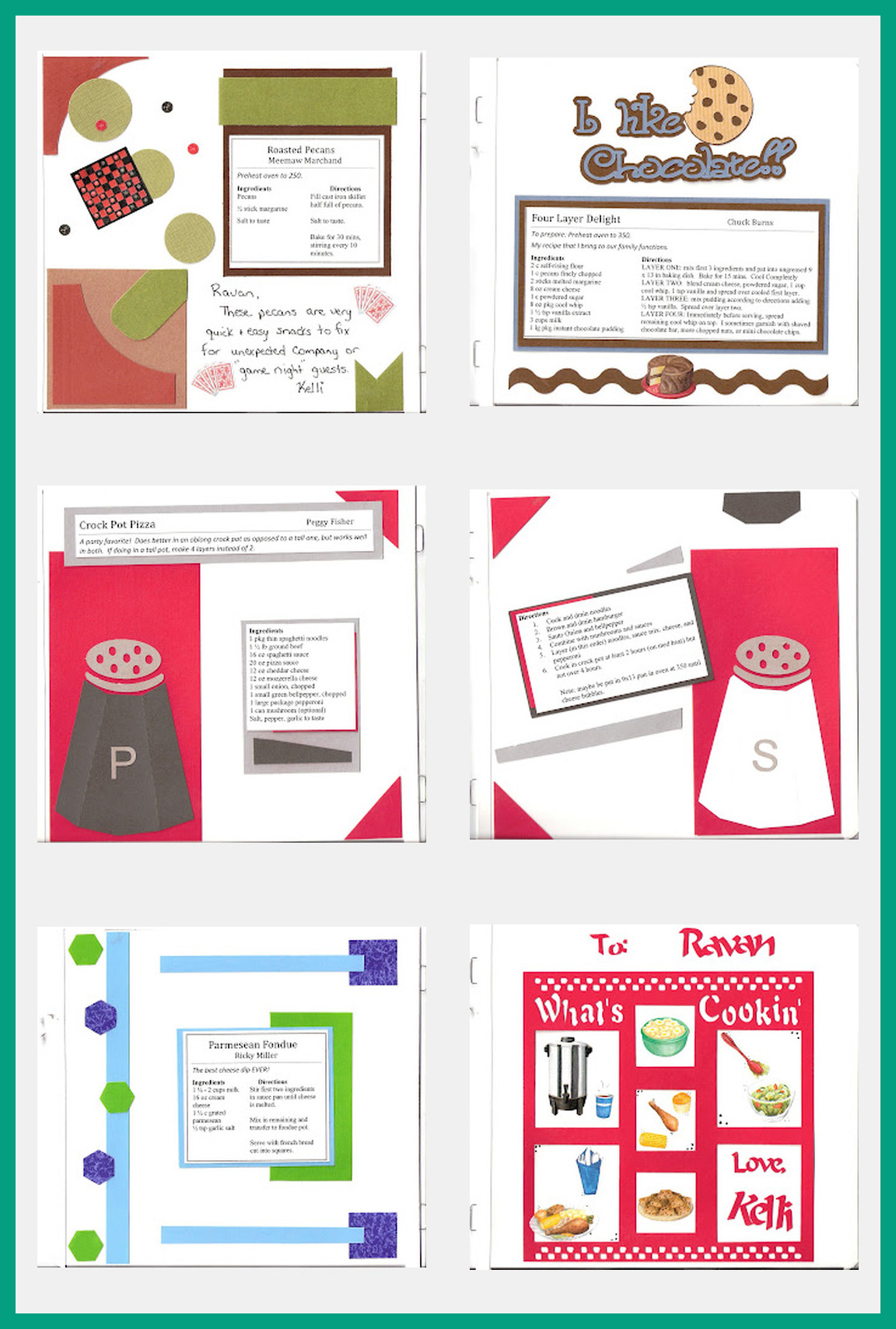
The pages are a funny little time capsule. There are recipes for Boneless BBQ Pork Ribs, Kelli’s Spaghetti, Rotel Dip, Brown Rice, Jerk Chicken Nachos, Roasted Pecans, Four Layer Delight, Crock Pot Pizza, pancakes, and Parmesan Fondue. There is even a rooster asking, “You talkin’ to me?” because apparently that was exactly the energy one recipe needed.
The Roasted Pecans page includes one of my handwritten notes. That kind of detail is what makes an old family cookbook better than a clean digital file. You can see what I emphasized, what I changed, and where I ran out of room. The pages are imperfect, but they are personal.
What I Would Do Differently Today
If I made another one, I would never glue an irreplaceable handwritten recipe directly to scrapbook paper. I own a few sacred originals, including my Meema’s broccoli rice casserole scribbled on a small piece of notebook paper and a family recipe written in my maternal grandmother’s oldest sister’s hand. Those originals stay protected.
I would scan or photograph an original card, print a copy, and use the copy in the album. That gives you the handwriting and the stains without asking the only surviving card to live next to glue, tape, food, and sunlight. Keep the original in an acid-free sleeve or archival box and store the digital copy in more than one place.
Protect the original. Craft with the copy.
- Scan both sides of every handwritten card.
- Save a full-resolution copy in two places.
- Print a duplicate for the scrapbook page.
- Use acid-free paper, page protectors, and photo-safe adhesive.
- Write down whose recipe it was and why your family remembers it.
How to Make Your Own Without Becoming a Scrapbooker
You do not need a room full of supplies or a new hobby. A three-ring binder, card stock, page protectors, and a handful of printed recipes are enough. The goal is a book your family will open, not a project that sits unfinished because every page needs to be elaborate.
- Choose the recipient and purpose. A wedding gift, a first apartment cookbook, and a family archive need different recipes.
- Collect the recipes. Ask relatives for favorites, scan handwritten cards, and add the dishes people request by name.
- Pick simple categories. Breakfast, main dishes, sides, desserts, and family favorites are plenty.
- Use one repeatable page layout. Leave room for the recipe, a short memory, and a photo or small decoration.
- Add context. Include who made the dish, when it was served, and any changes your family makes.
- Leave blank pages. A family cookbook should have room to grow.
Scrapbook Recipe Book Ideas Worth Borrowing
Even if your version is much simpler than mine, there are a few ideas from these old pages that still work beautifully.
- Group recipes by the person who shared them.
- Include a copy of the original handwriting beside a typed version.
- Add dates, holidays, and short notes about when the dish is served.
- Use pockets for loose recipe cards or future additions.
- Give family favorites their own section.
- Add an index so people can find a recipe without flipping through every page.
- Use tabs or one color per category to make the book practical in the kitchen.
The Recipe System I Use Now
Today, the bulk of my recipes live in Plan to Eat. I keep a few sacred recipes on paper, but I do not need every Tuesday-night dinner taking up room in a box or binder.
I plan on my computer, check the plan on my phone, and connect the calendar to Google Calendar. Mine also appears on our Skylight, so the kids can see what is for dinner without asking me all day. The connected shopping list can send ingredients to Walmart and Instacart and add them to my cart. Recipes on this site also have a Save to Plan to Eat button, which makes moving something into my own collection easy.
Disclosure: The link below is my Plan to Eat referral link. New annual subscribers receive 20% off their first annual payment, and I may earn a commission at no extra cost to you.
Keep the keepsakes. Digitize the everyday recipes.
That balance gives me the family history I want without bringing back the “what’s for dinner?” mess.
Whether you make a decorated album, a simple binder, or a digital collection, the best recipe system is the one you will actually use. Save the handwriting and stories that cannot be replaced. Give the ordinary recipes a home that makes dinner easier.


