
Recipe Organization: Choose the Right System for Your Kitchen


Recipe organization should help you find dinner, protect the recipes that matter, and stop loose papers from taking over the kitchen. There is no single perfect method for every recipe. If paper is your biggest problem, start with my recipe binder organization guide.
I use a hybrid system because my recipes do not all have the same job. Most of my everyday recipes live in Plan to Eat, a focused group of paper recipes belongs in a binder, and a few handwritten family recipes are sacred enough to protect separately. The right system depends on what you are saving and how you expect to use it.
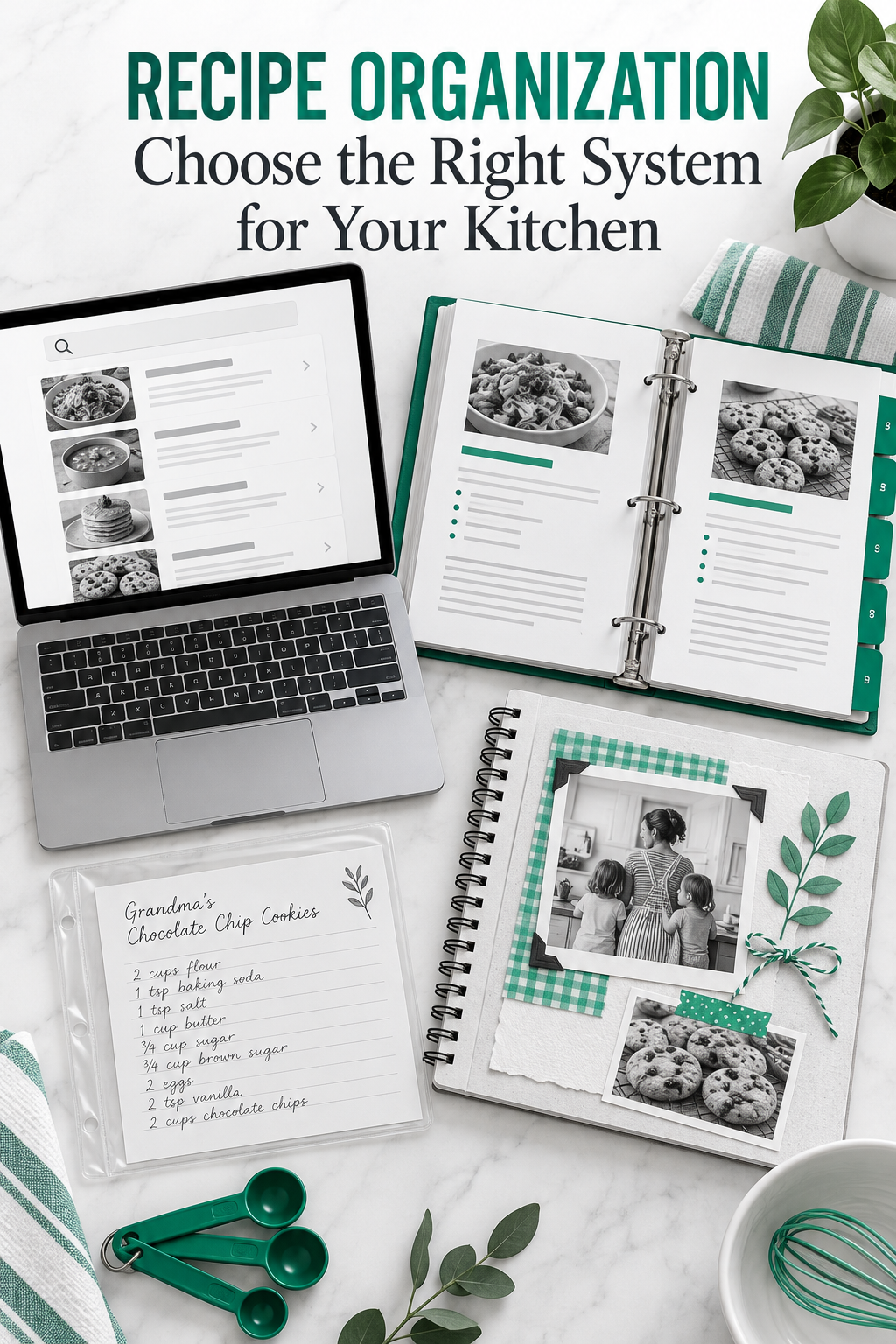
Use this page to choose the solution that matches your actual problem. Each option leads to a complete tutorial, so you can skip the methods that do not fit your kitchen or your life.
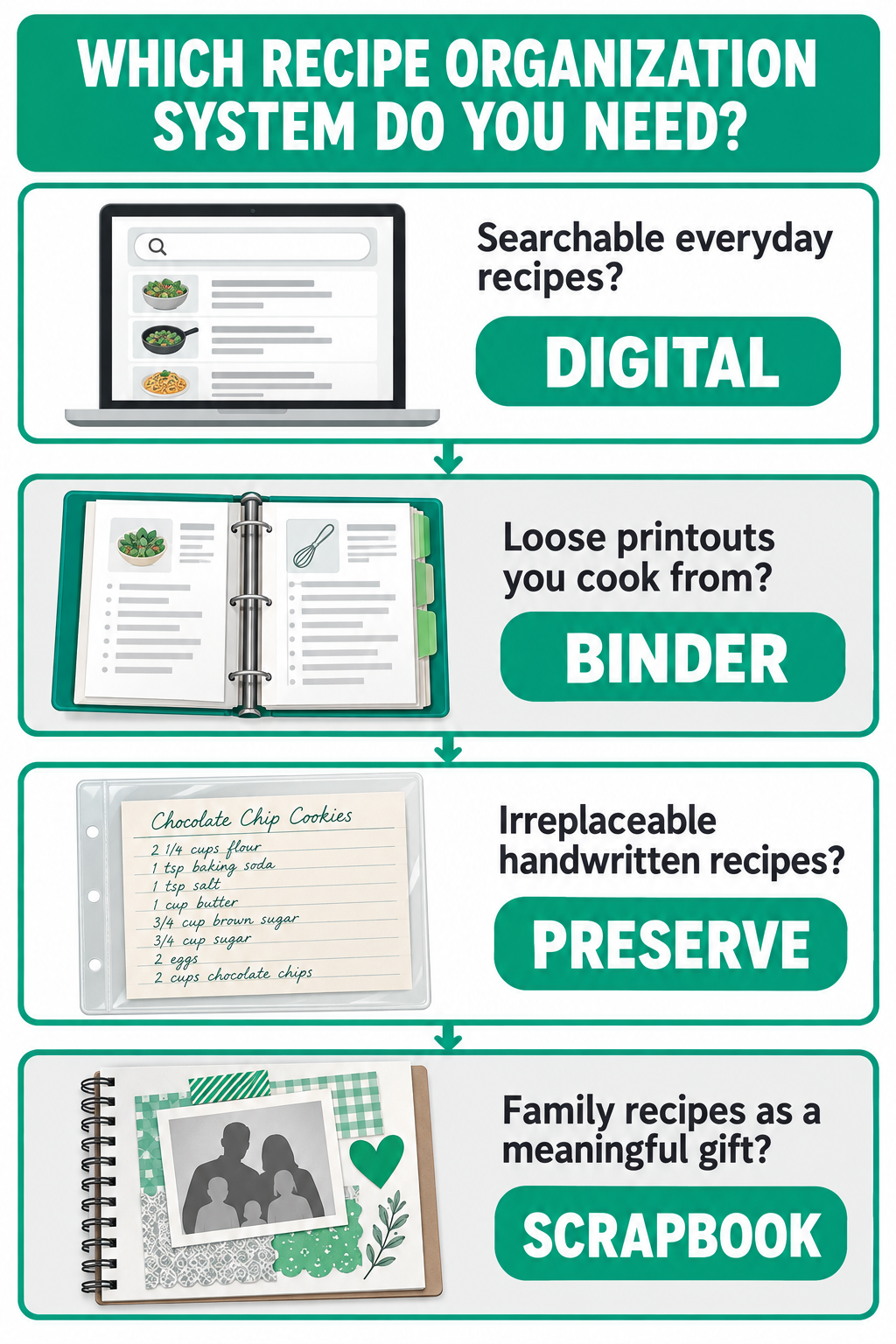
Choose Your Recipe Organization System
Start with the question that sounds most like your kitchen right now. You may need one system or a combination of two or three.
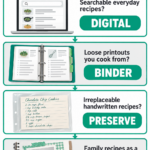
I need one searchable home for everyday recipes
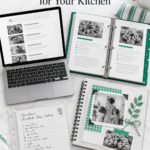
Choose a digital system when recipes are scattered across websites, printouts, cookbooks, Pinterest, and your phone. This is the system I use for meal planning and grocery shopping.
I have loose printouts I cook from
Choose a binder when you want a limited physical collection that opens flat on the counter. Page protectors, useful categories, and a test section keep it manageable.
I have irreplaceable handwritten recipes
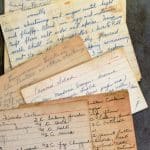
Choose preservation when the handwriting, stains, notes, and family history matter as much as the instructions. Protect the original and make a safer copy for cooking.
I want to turn family recipes into a gift
Choose a scrapbook recipe book when the stories and people behind the food deserve to be part of the gift. Use copies so the meaningful originals stay protected.
The Recipe Organization System I Actually Use
I do not force every recipe into the same container. The bulk of my collection lives in Plan to Eat because I can search recipes, plan meals on my computer, check the plan on my phone, and send ingredients to Walmart or Instacart. Our meal plan also connects to Google Calendar and appears on our Skylight, which has dramatically reduced the daily questions about what is for dinner.
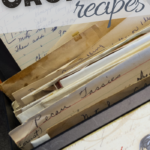
I still keep paper where paper makes sense. A binder can hold working copies and printouts I want beside me while cooking. A few original cards, including my Meema’s broccoli rice casserole and recipes copied from my maternal grandmother’s box, deserve more careful protection. They are not clutter. They are family history.
The simple rule
Keep everyday recipes where they are easiest to search and use. Protect the originals that cannot be replaced.
Would you like to save this?
Useful Recipe Categories That Do Not Get Complicated
Your categories should match how you look for food. Start broad enough that filing a recipe does not require a debate.
- Breakfast and brunch
- Appetizers and snacks
- Main dishes
- Soups and salads
- Side dishes and breads
- Desserts
- Family favorites
- Try next
If your family thinks by cooking method, use categories such as slow cooker, air fryer, freezer meals, and quick dinners instead. A useful system reflects the way you search, not the way someone else arranged a cookbook.
What Should You Organize First?
Do not begin by buying containers or trying to process every recipe you have ever saved. Start with one small group that causes a real problem.
- Gather the loose recipes currently cluttering one drawer or counter.
- Remove duplicates and recipes you already know you will never make.
- Separate sentimental originals from ordinary working recipes.
- Choose the digital, binder, preservation, or keepsake path above.
- Finish that small group before collecting recipes from another room or device.
The goal is not to create a museum for every recipe that has ever interested you. It is to build a collection that helps your family eat while keeping the pieces of family history that truly matter.


Do you live in FL? Or were you just visiting? We live about an hour from Orlando, I have yet to find any fellow Central Floridian bloggers.