
5+ Fun Ways to Practice Spelling
With school just around the corner, now is the time to begin firing back up the brain for learning! One of the subjects that kids struggle with most, especially in elementary school, is spelling.
Remember writing those long lists of spelling words over and over again? While those exercises may have helped us memorize the correct way to spell words, they may also have caused us to dread spelling class. Now, though, there are plenty of fun ways to practice spelling and I’ve rounded up ten different ideas you can try with your children!
For more spelling ideas, try this list of 15 free spelling games you can use at home!
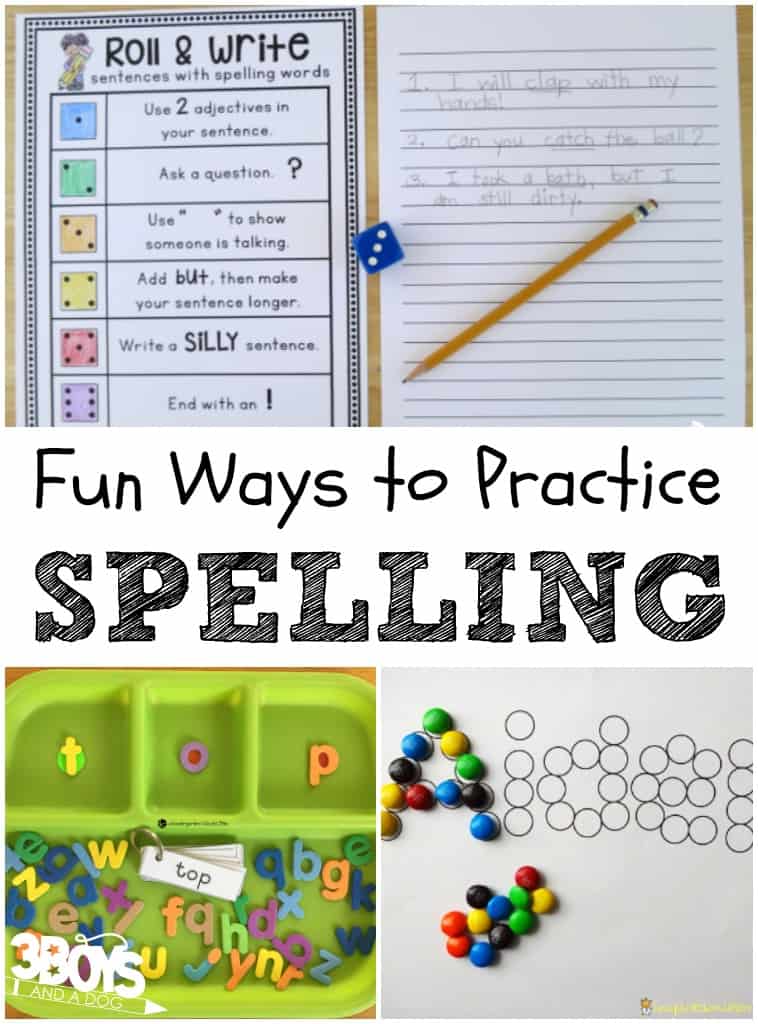
Fun Ways to Practice Spelling:
1. Use manipulatives. Try these Roll and Write Sentences, which allow kids to get spelling practice while playing with dice!
2. Work on syllable counting. Pick up these Scarecrow Syllables printables to help kids listen for syllables!
Shop My Homeschool Room:
Here are a few homeschool room picks you can find on Amazon. Click any image to see it. Yes, these are affiliate links.



Want more learning without printing more pages?
If your little one is between 2 and 8, ABCmouse is a full online curriculum of learning games, books and puzzles, so the practice keeps going on the days you are out of ink. Take a look at ABCmouse
Prefer something that shows up in the mailbox? Highlights High Five is made for ages 3 to 5, and the classic Highlights magazine picks up from 6 to 12. See High Five | See Highlights
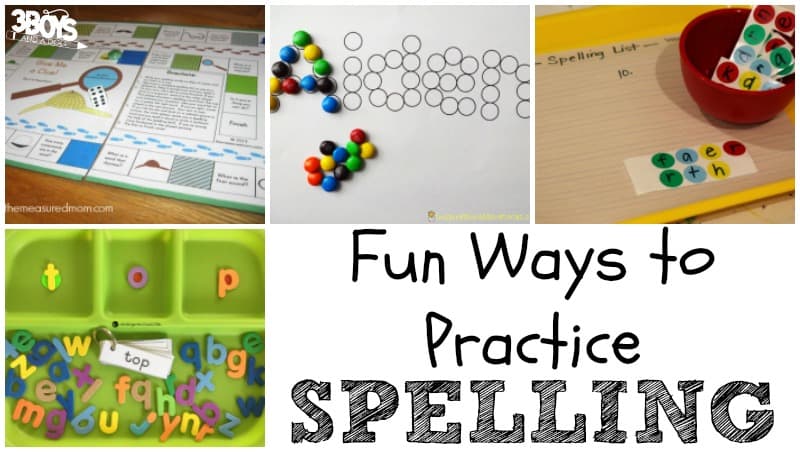
3. Play spelling games. This printable spelling board game is perfect for hands-on spelling practice!
4. Practice with a spelling curriculum. Try this weekly spelling curriculum to help third graders master spelling vocabulary words!
5. Spell with candy. These dot spelling printables are perfect for use with small candies such as M&Ms or Skittles!
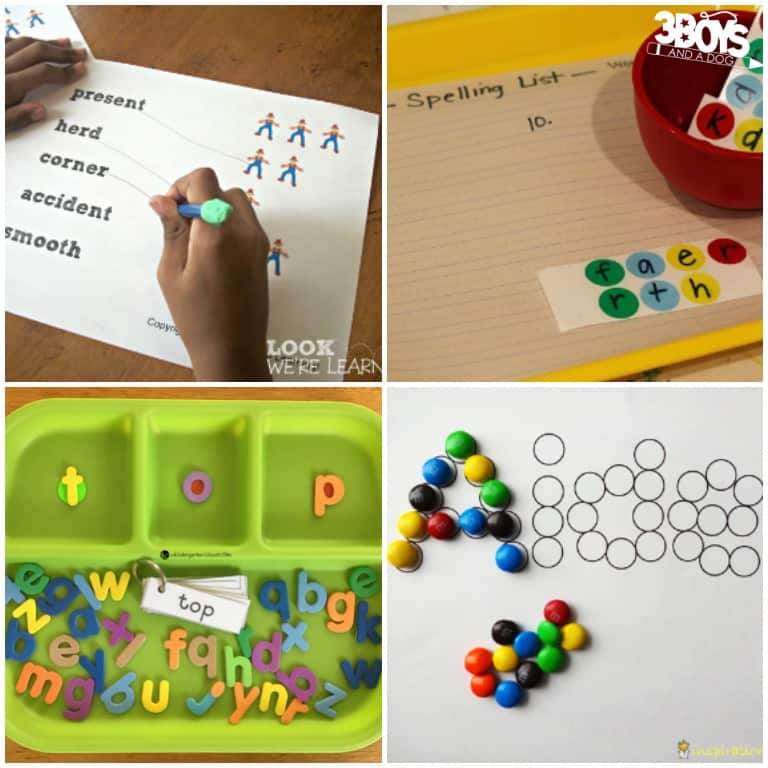
6. Use a spelling letter tray. Kindergartners can practice spelling CVC words with this fun spelling letter activity!
7. Let kids use their fingers. When handwriting skills are lacking, letting kids spell by writing with their fingers is a no-stress way to practice spelling. This fun window writing activity is perfect for young ones!
8. Try a spelling puzzle. This smart DIY Spelling Puzzle upcycles a puzzle into a spelling activity for kids!
Would you like to save this?
Craft Kits Worth Having
9. Add in fine motor skills. Working with this Dot Sticker Spelling Scramble is good spelling and fine motor practice in one!
10. Work with flashcards. Pick up these short vowel flashcards to help kids memorize the spellings of common words using short vowels!
Spelling Practice Resources:
These affiliate resources from Amazon make spelling practice fun for kids!
- The Learning Journey: Match It! Spelling
- The Spelling Teacher’s Lesson-A-Day: 180 Reproducible Activities to Teach Spelling, Phonics, and Vocabulary
- MECO Figure Spelling Game Platter Puzzle Spell Words
More Spelling Help Articles:
Free Spelling Games
Free Spelling Worksheet Makers and Activities
Spelling Practice Help for Boys
These 50+ Ways to Use Flashcards can be used for spelling flashcards, too!
❓ Frequently Asked Questions
Here are helpful answers to common questions about 5+ Fun Ways to Practice Spelling.
Start with your child’s age, current skills, interests, and attention span. Use one idea at a time, model it clearly, and adjust the pace or difficulty based on the response you see.
Treat it as information rather than failure. Try a smaller step, a different time of day, or another way to explain and practice the skill while keeping expectations consistent and encouraging.




Love these ideas! The one on the lawn looks like such fun – what a great way to breathe new life into a scrabble like game!